Ziauddin University

The BE Civil Engineering programme is designed to equip students with the knowledge and skills necessary to thrive in the dynamic field of civil engineering. Civil Engineering plays a crucial role in shaping our built environment, encompassing the design, construction, and maintenance of infrastructure essential to society. From bridges and highways to buildings and water supply systems, civil engineers are at the forefront of creating sustainable and innovative solutions to meet the evolving needs of our modern world. 

During this comprehensive programme, students will delve into various disciplines within civil engineering, gaining a solid foundation in core concepts and techniques. They will learn to analyse and design structures, develop sustainable infrastructure, and tackle challenges related to transportation, environmental impact, and urban development. By merging theory with practical applications, students will acquire the necessary skills to become proficient problem-solvers, effective communicators, and ethical professionals in the field. 

The programme offers a diverse curriculum that covers key areas such as structural engineering, geotechnical engineering, transportation engineering, water resources engineering, and construction management. Students will engage in hands-on projects, laboratory work, and internships to gain valuable real-world experience. Additionally, they will have access to state-of-the-art facilities and cutting-edge software tools, enabling them to simulate and analyse complex engineering scenarios.

Mission

To produce versatile professionals with diverse technical knowledge, leadership skills, and ethical awareness, driving innovation through sustainable solutions, fostering impactful careers through dynamic learning and professional excellence, while also contributing to socioeconomic advancement.

Programme Educational Objectives
  1. Graduates will analyse complex civil engineering problems using fundamental principles and advanced technologies.
  2. Graduates will develop practical and effective civil engineering solutions through systematic design and investigation.
  3. Graduates will expand their knowledge and capabilities, upholding ethical and professional responsibilities, and a commitment to sustainable development.
  4. Graduates will communicate effectively and participate in team-based environments, exhibiting strong leadership and management skills.


The mission of the programme is in alignment with the PEOs defined above, as shown in the following table.

B.E. (Civil) Programme MissionPEOs
1234
To produce versatile professionals with diverse technical knowledge, leadership skills, and ethical awareness, driving innovation through sustainable solutions, fostering impactful careers through dynamic learning and professional excellence, while also contributing to socioeconomic advancement✓✓✓✓
Programme Eligibility DAE Percentage age
BE Civil Engineering Inter (Computer, Pre Engg, Pre Med) , A-level (Phy, Chem, Maths) Pre-Medical Students can also apply. (*Zero Semester is mandatory.) i. Architecture ii. Civil iii.  Civil with any specialisation iv. Environmental v. Land & Mine Surveying 60
Duration of Programme

BE Civil Engineering

04 Years 
Admission by Migration

Under extraordinary circumstances, the Vice-Chancellor, on the recommendation of the Dean/Chairperson concerned, may allow migration of a student from other recognised institutions to the university and vice versa, provided that:

  • The academic councils of the institutions are agreed on the migration of student.
  • The courses of studies are equivalent. The credits earned in the previous institution may be permitted to be transferred to other institutions to which the student migrates.  
Admission Procedure

Under extraordinary circumstances, the Vice-Chancellor, on the recommendation of the Dean/Chairperson concerned, may allow migration of a student from other recognised institutions to the university and vice versa, provided that:

  • Obtain the admission form from the admission office or download it from the official website of the university.
  • Fill the form and attach all the required documents with it and resubmit it to the same office before the last date.
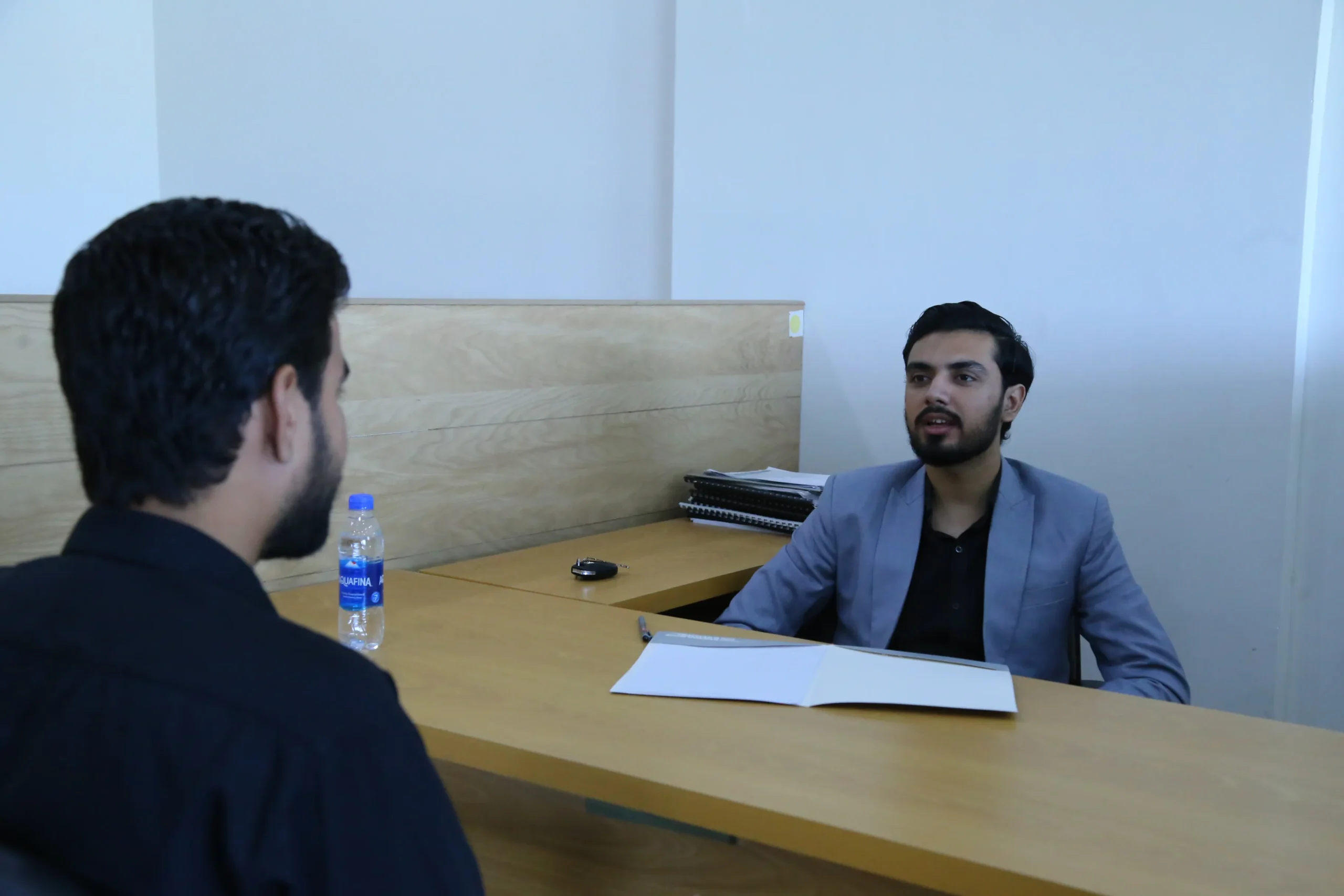
  • Eligible applicants have to appear  in the admission test and an interview; at the time of the interview, bring the original testimonial for verification.
  • Selected candidates shall be notified to submit fees according to the fee schedule within deadlines.  
Semester 1st
 (1st Semester)  
CodeCourseCr. Hr.
CS-101Introduction to Computing2+1
HS-105Functional English2+0
NS-109Calculus & Analytical Geometry3+0
HS-106Psychology2+0
CV-102Fundamentals of Surveying3+1
 Sub Total14+3
  Total =17
Semester 2nd
(2nd Semester)  
CodeCourseCr. Hr.  
EE-109Basic Electro Mechanical Engineering2+1
CVE-131Surveying & Geo-Informatics2+1
HS-103Pakistan Studies2+0
NSC-104Engineering Mechanics2+1
NS-113Linear Algebra & Differential Equations3+0
CVE-103Civil Engineering Materials2+0
 Sub Total13+3
  Total =16
Semester 3rd
(3rd Semester)  
CodeCourseCr. Hr.
CSC-215Civil Engineering Drawing2+1
CV-204Fluid Mechanics3+1
CV-215Mechanics of Solid – I3+1
NS-321Numerical Analysis3+0
HS-101 / HS-102Islamic Studies / Ethical Behavior*2+0
HS-205Law & Ethics2+0
 Sub Total =15+3
   18
Semester 4th
 (4th Semester)  
CodeCourseCr. Hr.
CVE-261Mechanics of Solid – II2+0
CV-232Reinforced Cement Concrete (RCC)3+1
CV-216Structural Analysis-I3+0
NS-205Engineering Geology2+1
HS-215Technical Writing & Presentation Skills2+0
NS-206Probability and Statistics3+0
 Sub Total =15+2
  Total =17
Semester 5th
 (5th Semester)  
CodeCourseCr. Hr.
CVE-333Structural Analysis-II2+0
CV-317Soil Mechanics – I3+1
CV-362Elements of Structural Design3+1
MS-311Engineering Economics & Management2+0
CV-318Construction Engineering2+1
CS-313Quantity Surveying & Costing2+1
 Sub Total =14+4
  Total =18
Semester 6th
 (6th Semester)  
CodeCourseCr. Hr.
CV-353Soil Mechanics – II3+1
CV-354Steel Structures3+0
CV-335Construction Management3+0
MS-322Water Resource Management2+0
CV-334Transportation Engineering-I3+1
ARC-311Architecture & Urban Planning2+0
 Sub Total =16+2
  Total =18 
Semester 7th
 (7th Semester)  
CodeCourseCr. Hr.
CV-455Design of Structures3+0
CVE-456Transportation Engineering-II2+0
CV-436Irrigation & Drainage Engineering3+0
CV-437Environmental Engineering – I2+1
CV-499Project0+3
 Sub Total =10+4
  Total =14 
Semester 8th

 (8th Semester)  
CodeCourseCr. Hr.
CV-448Traffic Engineering2+0
CV-457Environmental Engineering – II2+0
CV-XXX*CI – Elective Course-I2+0
MS-XXX*MS – Elective Course2+0
CV-499Project0+3
 Sub Total =8+3
  Total =11 


Scheme of Studies for BE Civil Engineering Programme (4 years)
SEMESTER-I
S. NoCourse CodeCourse TitleCredit Hours
1

ZUGE-001/

ZUGE-002

Islamic Studies/Ethics*2 + 0
2ZUGE-004Functional English3 + 0
3CVAP-111TApplied Physics & Electro-Mechanical Fundamentals (T)2 + 0
CVAP-111LApplied Physics & Electro-Mechanical Fundamentals (L)0 + 1
4ZUGE-006Applications of Information & Communication Technologies (T)2 + 0
Applications of Information & Communication Technologies (L)0 + 1
5CVED-112TEngineering Drawing (T)2 + 0
CVED-112LEngineering Drawing (L)0 + 1
6CVCM-114TCivil Engineering Materials (T)2 + 0
CVCM-114LCivil Engineering Materials (L)0 + 1
Sub Total13 + 4
Total17
*For non-Muslim students
SEMESTER-II
S. No.Course CodeCourse TitleCredit Hours
1ZUGE-010Understanding of Holy Quran-I1 + 0
2ZUGE-003Pakistan Studies2 + 0
3CVCA-121Calculus & Analytical Geometry3 + 0
4CVCP-122TComputer Programming (T)2 + 0
CVCP-122LComputer Programming (L)0 + 1
5CVEM-123TEngineering Mechanics (T)2 + 0
CVEM-123LEngineering Mechanics (L)0 + 1
6CVFS-124TFundamentals of Surveying (T)2 + 0
CVFS-124LFundamentals of Surveying (L)0 + 1
7CVMS-125TMechanics of Solid – I (T)2 + 0
CVMS-125LMechanics of Solid – I (L)0 + 1
Sub Total14 + 4
Total18
SEMESTER-III
S. No.Course CodeCourse TitleCredit Hours
1ZUGE-011Understanding of Holy Quran-II1 + 0
2ZUGE-005Expository Writing3 + 0
3CVSS-231Social Sciences Elect.2 + 0
4CVAH-232Arts & Humanities Elect.2 + 0
5CVLA-233Linear Algebra & Differential Equation3 + 0
6CVDG-234TCivil Engineering Drawing & Graphics (T)1 + 0
CVDG-234LCivil Engineering Drawing & Graphics (L)0 + 2
7CVAS-236TAdvanced Engineering Surveying (T)2 + 0
CVAS-236LAdvanced Engineering Surveying (L)0 + 1
Sub Total14 + 3
Total17
SEMESTER-IV
S. No.Course CodeCourse TitleCredit Hours
1ZUGE-003Ideology & Constitution of Pakistan2 + 0
2ZUGE-007Entrepreneurship2 + 0
3ZUGE-008Civics & Community Engagement0 + 2
4CVSA-241Structural Analysis-I3 + 0
5CVSM-242TSoil Mechanics (T)2 + 0
CVSM-242LSoil Mechanics (L)0 + 1
6CVFM-243TFluid Mechanics (T)2 + 0
CVFM-243LFluid Mechanics (L)0 + 1
7CVMS-244TMechanics of Solids – II (T)2 + 0
CVMS-244LMechanics of Solids – II (L)0 + 1
Sub Total13 + 5
Total18
SEMESTER-V
S. No.Course CodeCourse TitleCredit Hours
1CVPS-351Probability & Statistics3 + 0
2CVNA-352Numerical Analysis3 + 0
3CVRC-353TReinforced Concrete Design (RCD)-I (T)3 + 0
CVRC-353LReinforced Concrete Design (RCD)-I (L)0 + 1
4CVAF-354TAdvanced Fluid Mechanics (T)2 + 0
CVAF-354LAdvanced Fluid Mechanics (L)0 + 1
5CVGE-355TGeotechnical Engineering (T)3 + 0
CVGE-355LGeotechnical Engineering (L)0 + 1
6CVEG-356Engineering Geology2 + 0
 CVSC-357Survey CampNC
Sub Total16 + 3
Total19
Summer Semester
S. No.Course CodeCourse TitleCredit Hours
1CVIN-301Field Experience/InternshipNC
Sub Total0
Total0
SEMESTER-VI
S. No.Course CodeCourse TitleCredit Hours
1CVAI-361TArtificial Intelligence in Civil Engineering (T)1 + 0
CVAI-361LArtificial Intelligence in Civil Engineering (L)0 + 1
2CVSA-362Structural Analysis-II3 + 0
3CVRC-363TReinforced Concrete Design (RCD)-II (T)3 + 0
CVRC-363LReinforced Concrete Design (RCD)-II (L)0 + 1
4CVQC-364TQuantity & Cost Estimation (T)2 + 0
CVQC-364LQuantity & Cost Estimation (L)0 + 1
5CVEH-365TEngineering Hydrology (T)2 + 0
CVEH-365LEngineering Hydrology (L)0 + 1
6CVCE-366Construction Engineering2 + 0
Sub Total13 + 4
Total17
SEMESTER-VII
S. No.Course CodeCourse TitleCredit Hours
1CVFP-471Final Year Design Project-I0 + 3
2CVPM-472Project Management2 + 0
3CVOH-473Occupational Health & Safety1 + 0
4CVPA-474TPavement Analysis & Design (T)2 + 0
CVPA-474LPavement Analysis & Design (L)0 + 1
5CVAU-475Architecture & Urban Planning2 + 0
6CVSS-476Steel Structures2 + 0
7CVEE-477TEnvironmental Engineering (T)2 + 0
CVEE-477LEnvironmental Engineering (L)0 + 1
Sub Total11 + 5
Total16
SEMESTER-VIII
S. No.Course CodeCourse TitleCredit Hours
1CVFP-481Final Year Design Project-II0 + 3
2CVIE-482TIrrigation Engineering (T)2 + 0
CVIE-482LIrrigation Engineering (L)0 + 1
3CVHT-483Highway & Traffic Engineering2 + 0
4CVFE-484Foundation Engineering2 + 0
5CVHE-485THydraulics Engineering (T)2 + 0
CVHE-485LHydraulics Engineering (L)0 + 1
6CVGI-486TGeo Informatics (T)1 + 0
CVGI-486LGeo Informatics (L)0 + 1
Sub Total9 + 6
Total15
Total Credit Hours = 17 + 18 + 17+ 18 + 19 + 0 + 17 + 16 + 15 = 137


DomainKnowledge AreaTotal CoursesTotal Credit HoursPercentage (%)
EngineeringFoundation Courses82469.3%
Breadth Courses722
Depth Courses722
Advanced Computer & Information Science Courses26
Flexible Engineering Courses48
Multidisciplinary Courses47
Final Year Design Project (FYDP)26
Sub-Total3495
Non-EngineeringComputer Science Courses1330.7%
Humanities Courses1020
Management Science Courses24
Natural Science Courses515
Sub-Total1842
Grand Total52137100.0%
Elective Courses (Non-Engineering)

MS-421 Public Health Engineering
MS-416 Hazardous & Disaster Management

MS-417 Introduction to Entrepreneurship

MS-422 Construction Safety and Risk Management

MS-423 Contracts and Procurement Management 

Elective Courses (Core Civil Engineering)

CV-425 Building Information Modelling

CV-447 Applied Hydraulics

CV-464 Computer Aided Design

CV-467 Structural Design & Drawing

CV-438 Masonry Structures

CV-458 Finite Element Method

CV-426 Artificial Intelligence in Civil Engineering

NCRC

To achieve the set POs the program structure should be as follows. It is in line with the HEC and PEC framework for BS Civil Engineering

DomainNCRC
Name of CourseTotal CoursesTotal Credit Hours%
Non-EngineeringHumanities71231%
Management Sciences39
Natural Sciences821
Sub Total1842
EngineeringComputing3969%
Engineering Foundation828
Major Based Core (Breadth)620
Major Based Core (Depth)724
Inter-Disciplinary Engineering Breadth (Electives)27
Civil Engineering Project16
Industrial Training/Internship (Summer)00
Sub Total2794
Total 45136100%
ZUFESTM

To achieve the set POs the program structure should be as follows. It is in line with the HEC and PEC framework for BS Civil Engineering

Domain
Name of CourseTotal CoursesTotal Credit Hours% Overall
Non-EngineeringHumanities61228%
Management Sciences36
Natural Sciences618
Sub Total1536
EngineeringComputing3972%
Engineering Foundation827
Major Based Core (Breadth)824
Major Based Core (Depth)822
Inter-Disciplinary Engineering Breadth (Electives)25
Civil Engineering Project16
Industrial Training/Internship (Summer)00
Sub Total3093
  45129100%
Credit Hours Distribution

The Department of Civil Engineering follows NCRC/HEC guidelines for distribution of credit hours between core and elective courses. Any changes to the curriculum are only made after a thorough deliberation in the board of studies (BOS) meetings, which is also attend by external experts. Following table shows the comparative analysis of NCRC and ZUFESTM for Engineering and Non-Engineering domain courses.

ZUFESTM (Civil Engineering)
DomainName of CourseTotal CoursesTotal Credit Hours% Overall
Non-EngineeringHumanities61228%
Management Sciences36
Natural Sciences618
Sub Total1536
EngineeringComputing3972%
Engineering Foundation827
Major Based Core (Breadth)824
Major Based Core (Depth)822
Inter-Disciplinary Engineering Breadth (Electives)25
Civil Engineering Project16
Industrial Training/Internship (Summer)00
Sub Total3093 
Total45129100%
  1. Graduates have the opportunity to embark on entrepreneurial ventures, establishing their own construction firms or consultancy businesses and offering services as contractors and designers.

  2. Graduates can apply their expertise in water resources, contributing to projects involving the construction of dams, barrages, culverts, and other critical infrastructure.

  3. Graduates can make a significant impact by contributing their skills to enhance Irrigation Engineering in underdeveloped regions of Pakistan, improving agricultural productivity and water management.

  4. By collaborating with transportation companies, graduates can conduct vital studies such as traffic management, safety assessments, signage planning, road furniture design, and infrastructure enhancement projects, ensuring smoother and safer journeys.

  5. Graduates can contribute their knowledge to soil testing laboratories, ensuring the quality and safety of construction projects by analysing soil properties and making recommendations.
  6. Graduates can play a pivotal role in industries related to wastewater treatment and solid waste management, aligning with the scope of projects like the China-Pakistan Economic Corridor (CPEC) to promote environmental sustainability and responsible resource management.

Programme Learning Outcomes (PLOs)/Graduate Attributes (GA):

PLO-1 Engineering Knowledge: Apply knowledge of mathematics, natural science, engineering fundamentals and engineering specialisation to the solution of complex engineering problems.

PLO-2 Problem Analysis: Identify, formulate, conduct research literature, and analyse complex engineering problems, reaching substantiated conclusions using first principles of mathematics, natural sciences and engineering sciences.

PLO-3 Design/Development of Solutions: An ability to design solutions for complex engineering problems and design systems, components or processes that meet specified needs with appropriate consideration for public health and safety, cultural, societal, and environmental considerations.

PLO-4 Investigation: Conduct investigation of complex engineering problems using research-based knowledge and research methods, including design of experiments, analysis and interpretation of data, and synthesis of information to provide valid conclusions.

PLO-5 Tool Usage: Create, select and apply appropriate techniques, resources, and modern engineering and IT tools, including prediction and modelling, to complex engineering problems, with an understanding of the limitations.

PLO-6 The Engineer and the World: Analyse and evaluate sustainable development impacts to society, the economy, sustainability, health and safety, legal frameworks, and the environment while solving complex engineering problems.

PLO-7 Ethics: Apply ethical principles and commit to professional ethics and norms of engineering practice and adhere to relevant national and international laws. Demonstrate an understanding of the need for diversity and inclusion.

PLO-8 Individual and Collaborative Teamwork: Function effectively as an individual, and as a member or leader in diverse and inclusive teams and in multidisciplinary, face-to-face, remote and distributed settings.

PLO-9 Communication: Communicate effectively and inclusively on complex engineering activities with the engineering community and with society at large, such as being able to comprehend and write effective reports and design documentation, and make effective presentations, taking into account cultural, language, and learning differences.

PLO-10 Project Management and Finance: Demonstrate knowledge and understanding of engineering management principles and economic decision-making and apply these to one’s own work, as a member and leader in a team, to manage projects in multidisciplinary environments.

PLO-11 Lifelong Learning: Recognise the need for, and have the preparation and ability for, i) independent and lifelong learning, ii) adaptability to new and emerging technologies, and iii) critical thinking in the broadest context of technological change.

The PLOs/GAs are appropriately mapped with PEOs as shown in the table below:

PLOs/GAsPEO 1PEO 2PEO 3PEO 4
PLO-1 Engineering Knowledge✔   
PLO-2 Problem Analysis✔   
PLO-3 Design/Development of Solutions ✔  
PLO-4 Investigation ✔  
PLO-5 Tool Usage✔   
PLO-6 The Engineer & the World  ✔ 
PLO-7 Ethics  ✔ 
PLO-8 Individual & Collaborative Teamwork   ✔
PLO-9 Communication   ✔
PLO-10 Project Management & Finance   ✔
PLO-11 Lifelong Learning  ✔ 

Education City Site (Morning)

Fee Description Frequency # of Cr. Hr Fee/Cr. Hr Amount
Admission Fee One Time 10,000
Security Deposit One Time
Application Fee One Time 2,500
Tuition Fee Semester 17 4,400 74,800
Examination Fee Semester 17 250 4,250
Other Charges Semester 2,000
Semester Registration Fee Semester 5,000
Total Fees — — — 98,550

North Campus (Evening)

Description Amount 
Admission Processing Fee 2,500
Admission Fee10,000
Student Activity Fee Per Semester
Registration Fee Per Semester
Credit Hours (1st Semester)
Tuition Fee per credit hour (1st Semester) 
Exam Fee per credit hour (1st Semester)  –
Tuition Fee (1st Semester)7,650
Exam Fee (1st Semester)850
At the time of Admission10,000
Next Month8,500