
| 1st Semester (BS Software Engineering) | ||||
| Description | Frequency | Fee/Cr. Hr | # of Cr. Hr | Total Fee |
| Admission Fee | One-Time | 10,000 | 10,000 | |
| Security Deposit (Refundable) | One-Time | Nil | Nil | |
| Tuition Fee | Per Semester / Per Credit Hour | 4,500 | 16 | 72,000 |
| Examination Fee | Per Semester / Per Credit Hour | 250 | 16 | 4,000 |
| Student Activiity Fee | Per Semester | 2000 | 2,000 | |
| Registration Fee | Per Semester | 5000 | 5000 | |
| Total Fees | 93,000 | |||
BS Software Engineering

- Introduction
- Eligibility Criteria
- Study Scheme
- Career Prospects
- Learning Outcomes
- Fee Structure
Ziauddin University’s Software Engineering programme is crafted to provide students with a strong academic and practical foundation in software development, engineering methodologies, and emerging technologies, preparing them for rewarding careers in the software industry, research, and innovation.
Vision
To be a leading hub of innovation and excellence in computing—shaping future-ready professionals, pioneering research, and transformative solutions in the ever-evolving world of technology.
Mission
Our mission is to produce competent graduates with a strong foundation in software engineering principles and practical expertise in designing, developing, testing, and maintaining high-quality software systems. We aim to bridge the gap between academic knowledge and industry practices by nurturing problem-solving abilities, innovation, and a user-centred approach to software solutions. Alongside technical excellence, we emphasise the development of effective communication skills, ethical responsibility, teamwork, and a commitment to lifelong learning—empowering our students to drive technological progress and contribute meaningfully to the software industry and society.
Programme Educational Objectives (PEO)
PEO 1:
Graduates will be equipped with a solid understanding of computing fundamentals, enabling them to analyze and solve complex problems effectively. They will apply mathematical and scientific principles along with specialized knowledge to design and evaluate innovative computing solutions.
PEO 2:
Graduates will engage in their professional careers with a strong sense of ethical responsibility and awareness of societal implications, effectively assessing health, safety, legal, and cultural issues while contributing to sustainable development in local and global contexts.
PEO 3:
Graduates will demonstrate exceptional communication skills, allowing them to convey complex technical information clearly to diverse audiences. They will excel in both individual and team settings, showcasing leadership and collaboration in multidisciplinary projects.
PEO 4:
Graduates will commit to lifelong learning, actively pursuing professional development opportunities, certifications, and further education to enhance their skills and knowledge, ensuring they remain competitive and innovative in the rapidly evolving field of computing.
Lab Facilities
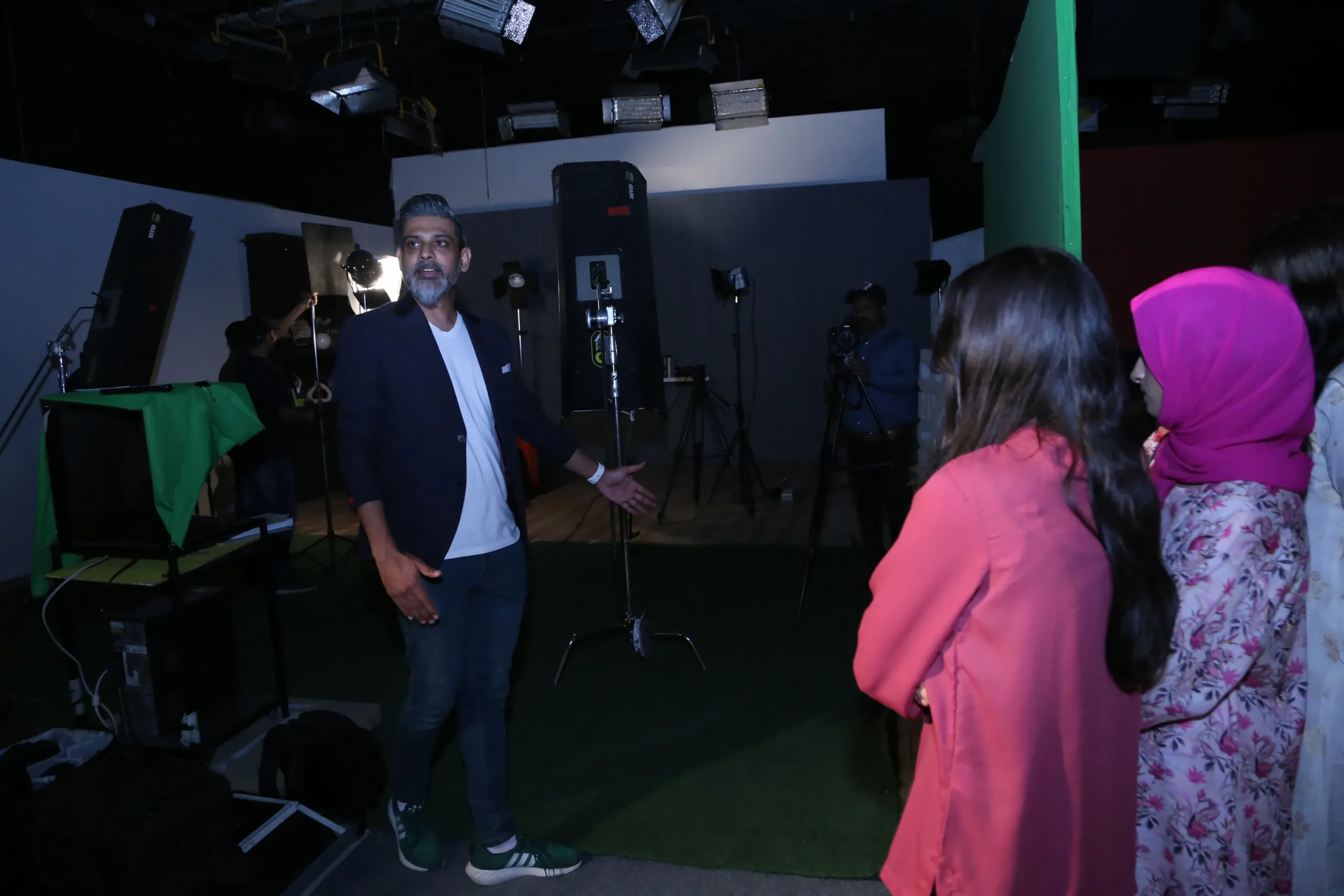
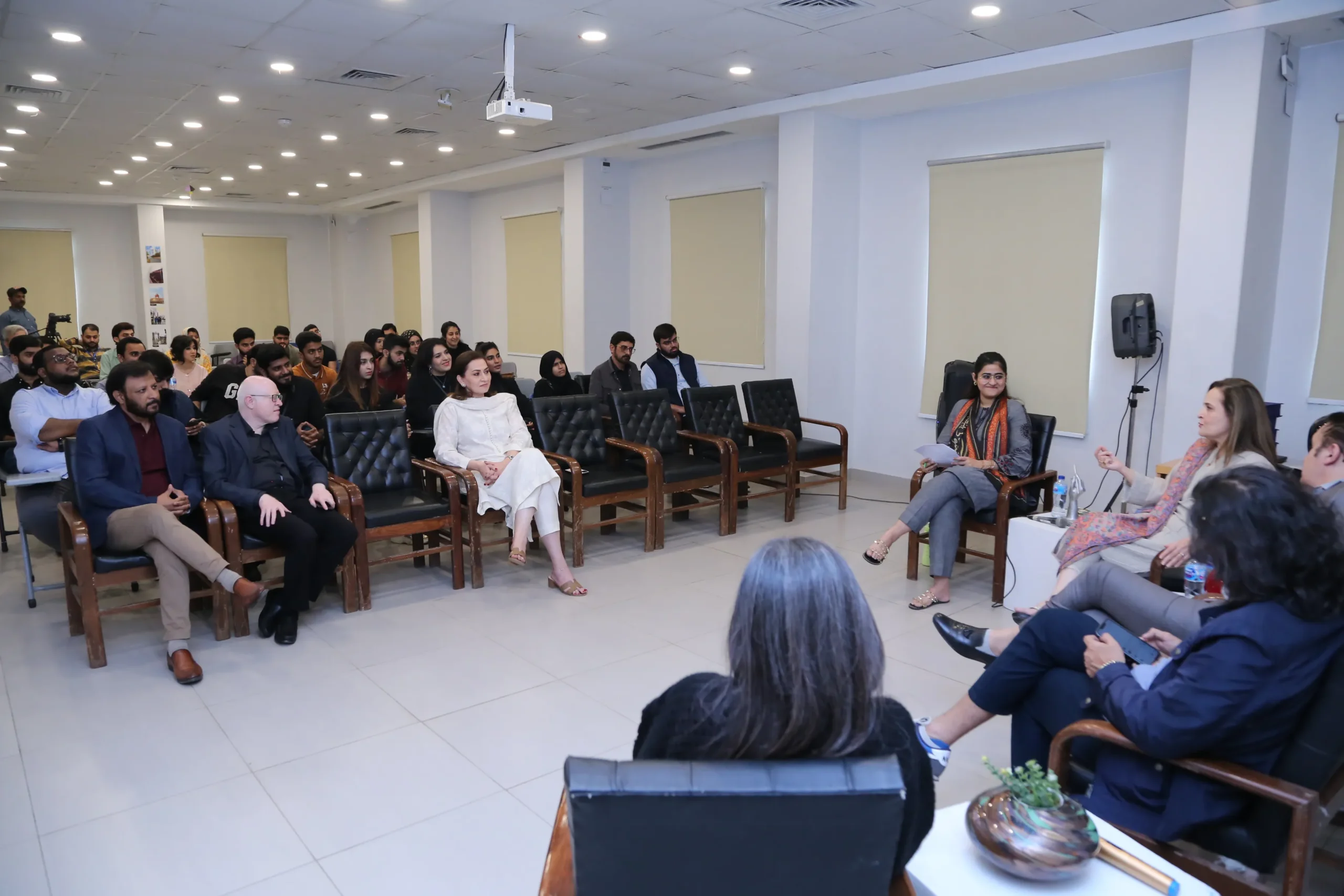
Lecture Rooms & Instructional Facilities
- Room Type: Dedicated and Shared Lecture Rooms
- Lecture Room Size: Each room is approximately 350 square feet in size.
- Available Space per Student: 30 square feet per student.
- Instructional Equipment: Each lecture room is equipped with a whiteboard, multimedia projectors, speaker system, computers, and internet connectivity.
- Additional Amenities: The rooms are fully air-conditioned for a comfortable learning environment.
Laboratories
Lab Name | Timings | Facilities | Lab Space per Student |
|---|---|---|---|
Computing Lab | Weekdays (8:30am–4:30pm) | 32 Workstations (Core i3/i5, 3rd & 6th Gen), High-end Software, LAN/Wi-Fi, Scanner, Printing, Whiteboard, Multimedia | 40 sq. ft |
Operating System Lab | Weekdays (8:30am–4:30pm) | 5 Workstations (Core i3/i5, 3rd & 6th Gen), High-end Software, LAN/Wi-Fi, Printing Facility | 40 sq. ft |
Final Year Project Lab | Weekdays (8:30am–4:30pm) | 3 Workstations (Core i3/i5, 3rd & 6th Gen), High-end Software, LAN/Wi-Fi, Printing, Sensors, Potentiometer, 22″ LCD with HDMI, Extension Board | Not specified |
Why Choose Software Engineering
Ziauddin University’s Software Engineering programme is crafted to provide students with a strong academic and practical foundation in software development, engineering methodologies, and emerging technologies, preparing them for rewarding careers in the software industry, research, and innovation.
- Industry-driven and comprehensive curriculum:
The programme offers an up-to-date curriculum that blends theoretical knowledge with practical applications, covering key areas such as software development, software architecture, testing, project management, and continuous process improvement, in line with both local and international industry standards. - Hands-on programming and technical skill development:
Students gain practical experience by working with programming languages like Java, C++, and Python, along with exposure to modern software development tools and platforms. This ensures they can confidently design, develop, and deploy effective software solutions. - Focus on engineering principles and software quality:
The programme emphasises the importance of software engineering principles, design patterns, testing frameworks, and quality assurance techniques to ensure students can create high-quality, dependable, and maintainable software systems. - Integration of emerging technologies and trends:
Students are introduced to current and evolving technologies, including cloud computing, mobile app development, web technologies, DevOps practices, AI integration, and secure software development, equipping them with skills relevant to today’s dynamic tech environment. - Capstone projects and industry engagement:
Final-year capstone projects, internships, and collaborations with software companies allow students to apply their learning to real-world challenges, gaining valuable industry insights and practical experience that enhance their career readiness.
Cultivation of professional, teamwork, and leadership skills:
Beyond technical expertise, the programme fosters key professional skills such as communication, teamwork, leadership, critical thinking, and technical documentation, preparing graduates to excel in collaborative work settings and leadership roles within the software industry.
Location & Infrastructure
Campus Location: North Site (ZUFESTM), F-103, Block B, North Nazimabad, Karachi.
Covered Area: The ZUFESTM area spans 18,000 square feet (approximately 2,000 square yards), while the SE Department occupies 180 square feet.
Building Ownership: The facilities are located in a university-owned building.
- At least 50% marks in Intermediate (HSSC) examination with Mathematics or equivalent qualification with Mathematics, certified by IBCC. OR At least 50% marks in Intermediate (HSSC) examination with a pre-medical or equivalent qualification, certified by IBCC.
- Deficiency: Students with pre-medical must have to pass deficiency courses of Mathematics of 06 credit hours in first two semesters.
Programme Type
Semester system
Semester Duration
Semester system:
- 16 weeks of Teaching
- 2 weeks for Exams
Programme Duration/Length
- 8 Semesters
- Min: 4 Years
- Max: 7 Years
Weightage for the final examination
- Attendance* 10%
- Continuous assessments 40%
- Final Examination 50%
Semester 1st
| Course Code | Course Title | Th. | Lab | Cr. Hr |
| CS-107 | Introduction to Info. & Comm. Technologies | 2 | 1 | 2+1 |
| CS-104 | Programming Fundamentals | 3 | 1 | 3+1 |
| NS-106 | Applied Physics | 2 | 1 | 2+1 |
| NS-115 | Basic Mathematics | 6 | 0 | N/C |
| NS-201 | Linear Algebra | 3 | 0 | 3+0 |
| HS-100 | English Composition & Comprehension | 3 | 0 | 3+0 |
| Total | 13 | 3 | 16 |
Semester 2nd
| Course Code | Course Title | Th. | Lab | Cr. Hr |
| CS-103 | Discrete Structures | 3 | 0 | 3+0 |
| CS-112 | Object Oriented Programming | 3 | 1 | 3+1 |
| CS-212 | Introduction to Software Engineering | 2 | 1 | 2+1 |
| MS-101 | Principles of Accounting (University Elective-I) | 3 | 0 | 3+0 |
| HS-114 | Communication & Presentation Skills | 3 | 0 | 3+0 |
| HS-103 | Pakistan Studies | 2 | 0 | 2+0 |
| Total | 16 | 2 | 18 |
Semester 3rd
| Course Code | Course Title | Th. | Lab | Cr. Hr |
| SE-211 | Software Requirement Engineering | 3 | 0 | 3+0 |
| CS-211 | Data Structures & Algorithms | 3 | 1 | 3+1 |
| SE-344 | Human Computer Interaction | 3 | 0 | 3+0 |
| NS-109 | Calculus and Analytical Geometry | 3 | 0 | 3+0 |
| HS-101 or HS102 | Islamic Studies or Ethical Behaviour | 2 | 0 | 2+0 |
| MS-203 | Human Resource Management (University Elective II) | 3 | 0 | 3+0 |
| Total | 17 | 1 | 18 |
Semester 4th
| Course Code | Course Title | Th. | Lab | Cr. Hr |
| CS-233 | Introduction to Database System | 3 | 1 | 3+1 |
| CS-234 | Operating System | 3 | 1 | 3+1 |
| HS-107 | Psychology (University Elective-III) | 0 | 3+0 | |
| SE-343 | Software Architecture & Design | 2 | 1 | 2+1 |
| NS-206 | Probability & Statistics | 3 | 0 | 3+0 |
| Total | 14 | 3 | 17 |
Semester 5th
| Course Code | Course Title | Th. | Lab | Cr. Hr |
| SE-351 | Software Construction and Development | 2 | 1 | 2+1 |
| CS-311 | Stochastic Process (SE Supporting –I) | 3 | 0 | 2+1 |
| CS-302 | Operations Research (SE Supporting –II) | 3 | 0 | 3+0 |
| CS-353 | Computer Communication and Networks | 3 | 1 | 3+1 |
| HS-331 | Technical & Business Writing | 3 | 0 | 3+0 |
| Total | 14 | 2 | 16 |
Semester 6th
| Course Code | Course Title | Th. | Lab | Cr. Hr |
| SE-312 | Software Quality Engineering | 3 | 0 | 3+0 |
| CS-304 | Information Security | 3 | 0 | 3+0 |
| HS-401 | Professional Practices | 3 | 0 | 3+0 |
| CS-413 | Web Engineering | 2 | 1 | 2+1 |
| SE-313 | Formal Methods in Software Engineering (SE Supporting –III) | 3 | 0 | 3+0 |
| CS-351 | Automata Theory & Formal Language (SEElective-I) | 3 | 0 | 3+0 |
| Total | 17 | 1 | 18 |
Semester 7th
| Course Code | Course Title | Th. | Lab | Cr. Hr |
| SE-451 | Final Year Project –I | 0 | 3 | 0+3 |
| SE-442 | Software Project Management | 3 | 0 | 3+0 |
| SE-453 | Software Re-Engineering | 3 | 0 | 3+0 |
| CS-451 | Distributed Computing (SE Elective-II) | 3 | 0 | 3+0 |
| CS-453 | Neural Networks & Fuzzy Logic (SE Elective-III) | 2 | 1 | 2+1 |
| Total | 11 | 4 | 15 |
Semester 8th
| Course Code | Course Title | Th. | Lab | Cr. Hr |
| SE-451 | Final Year Project –II | 0 | 3 | 0+3 |
| CS-454 | Cloud Computing (SE Elective-IV) | 2 | 1 | 2+1 |
| CS-433 | Mobile Application Development (SE Elective-V) | 2 | 1 | 2+1 |
| MS-414 | Entrepreneurship & Leadership (University Elective-IV) | 3 | 0 | 3+0 |
| Total | 7 | 5 | 12 |
Software Engineering offers a diverse range of career opportunities for graduates passionate about creating innovative, reliable, and high-quality software solutions. Below are some of the prominent career paths for those with a degree in Software Engineering:
Software Engineer
Software engineers apply systematic engineering principles to design, develop, test, and maintain software systems. They work across the entire software development life cycle, using programming languages like Java, Python, and C++ to build efficient, scalable solutions.
Web Developer
Web developers specialise in creating dynamic, interactive websites and web applications. They work with front-end technologies such as HTML, CSS, JavaScript, and back-end frameworks like Node.js and PHP, ensuring functionality, responsiveness, and user-friendliness.
Mobile Application Developer
Mobile app developers design and build software applications for smartphones and tablets. Using languages like Swift for iOS and Kotlin for Android, they develop intuitive, high-performing apps tailored to mobile platforms.
Full-Stack Developer
Full-stack developers possess expertise in both front-end and back-end development. They handle the complete development process, from user interface design to server-side programming and database management, making them highly adaptable professionals.
Game Developer
Game developers focus on creating interactive and engaging video games for platforms such as PC, consoles, and mobile devices. They work with game engines like Unity and Unreal Engine, blending programming, graphics, and gameplay mechanics.
DevOps Engineer
DevOps engineers streamline the collaboration between software development and IT operations by automating processes such as deployment, testing, and monitoring. They ensure continuous integration and delivery for faster, more reliable software releases.
Cybersecurity Engineer
Cybersecurity engineers integrate security measures into the software development process to protect applications and systems from cyber threats. They design secure software architectures, conduct vulnerability assessments, and implement defence strategies.
Data Scientist
Data scientists use statistical analysis, machine learning, and data visualisation to uncover insights from complex data sets. They help organisations make informed, data-driven decisions by building predictive models and analytical tools.
Software Tester/Quality Assurance (QA) Engineer
QA engineers ensure the quality and functionality of software products by designing test plans, executing test cases, and identifying defects. They play a crucial role in delivering reliable, bug-free software to end users.
Systems Analyst
Systems analysts evaluate organisational needs and design software systems that meet business objectives. They act as a bridge between technical teams and business stakeholders, ensuring that software solutions align with user requirements.
Cloud Engineer
Cloud engineers design, implement, and manage software solutions on cloud platforms such as AWS, Microsoft Azure, and Google Cloud. They focus on scalability, security, and cost-efficiency in cloud-based software deployment.
Embedded Software Engineer
Embedded software engineers develop software that runs on hardware devices such as automotive systems, medical equipment, and consumer electronics. They program low-level software using languages like C and C++ for optimised performance and reliability.
Data Engineer
Data engineers build and maintain data infrastructure, creating pipelines that process, store, and transform data for analysis. Their work supports data science teams in accessing high-quality, reliable data for decision-making and analytics.
UI/UX Engineer
UI/UX engineers design intuitive and user-friendly software interfaces that enhance user experience. They collaborate with development teams to ensure applications are visually appealing, easy to navigate, and aligned with user needs.
IT Consultant
IT consultants provide expert advice on technology solutions to meet business challenges. They analyse organisational goals, recommend appropriate software systems, and guide clients through implementation and optimisation processes.
Software Architect
Software architects design the technical framework and high-level structure of complex software systems. They select appropriate technologies, establish best practices, and ensure scalability, maintainability, and performance of software solutions.
Project Manager
Software engineering graduates can pursue roles as project managers, leading software development projects by coordinating resources, managing budgets, setting timelines, and ensuring successful project delivery.
Systems Administrator
Systems administrators manage and maintain IT infrastructure, including servers, networks, and databases. They ensure system reliability, troubleshoot issues, and implement upgrades to keep software environments running smoothly.
Business Intelligence Analyst
Business intelligence analysts collect and analyse business data to generate actionable insights. They use tools like Power BI, Tableau, and SQL to help organisations improve operations, optimise strategies, and enhance decision-making.
Automation Engineer
Automation engineers develop software systems to automate repetitive tasks and processes, increasing efficiency and reducing human error. They design scripts and tools to streamline workflows across industries.
Network Engineer
Network engineers design, configure, and maintain secure, high-performance network systems. They ensure seamless connectivity, monitor network health, and implement safeguards against security threats.
The Software Engineering programme equips graduates with the skills and knowledge to excel in a wide range of industries, from technology and finance to healthcare and entertainment. Whether focusing on development, testing, security, or system design, graduates are well-prepared to innovate, lead, and contribute to the future of software development.
| Programme Learning Outcomes (PLOs) | Computing Professional Graduate Outcomes |
| 1. Academic Education | To prepare graduates as computing professionals |
| 2. Knowledge for Solving Computing Problems | Apply knowledge of computing fundamentals, knowledge of a computing specialisation, and mathematics, science, and domain knowledge appropriate for the computing specialisation to the 16 abstractions and conceptualisations of computing models from defined problems and requirements |
| 3. Problem Analysis | Identify, formulate, research literature, and solve complex computing problems reaching substantiated conclusions using fundamental principles of mathematics, computing sciences, and relevant domain disciplines |
| 4. Design/ Development of Solutions | Design and evaluate solutions for complex computing problems, and design and evaluate systems, components, or processes that meet specified needs with appropriate consideration for public health and safety, cultural, societal, and environmental considerations |
| 5. Modern Tool Usage | Create, select, adapt and apply appropriate techniques, resources, and modern computing tools to complex computing activities, with an understanding of the limitations |
| 6. Individual and Team Work | Function effectively as an individual and as a member or leader in diverse teams and in multi-disciplinary settings |
| 7. Communication | Function effectively as an individual and as a member or leader in diverse teams and in multidisciplinary settings |
| 8. Computing Professionalism and Society | Understand and assess societal, health, safety, legal, and cultural issues within local and global contexts, and the consequential responsibilities relevant to professional computing practice |
| 9. Ethics | Understand and commit to professional ethics, responsibilities, and norms of professional computing practice |
| 10. Life-long Learning | Recognise the need for, and have the ability to engage in, independent learning for continual development as a computing professional |
North Campus (Morning)
North Campus (Evening)
| Description | Amount |
| Admission Processing Fee | 2,500 |
| Admission Fee | 10,000 |
| Student Activity Fee Per Semester | – |
| Registration Fee Per Semester | – |
| Credit Hours (1st Semester) | – |
| Tuition Fee per credit hour (1st Semester) | – |
| Exam Fee per credit hour (1st Semester) | – |
| Tuition Fee (1st Semester) | – |
| Exam Fee (1st Semester) | – |
| At the time of Admission | 10,000 |
| Next Month | 10,000 |