
Doctor of Occupational Therapy

- Introduction
- Eligibility Criteria
- Scheme of Study
- Learning Outcomes
- Career Prospects
- Sample Paper
- Fee Structure
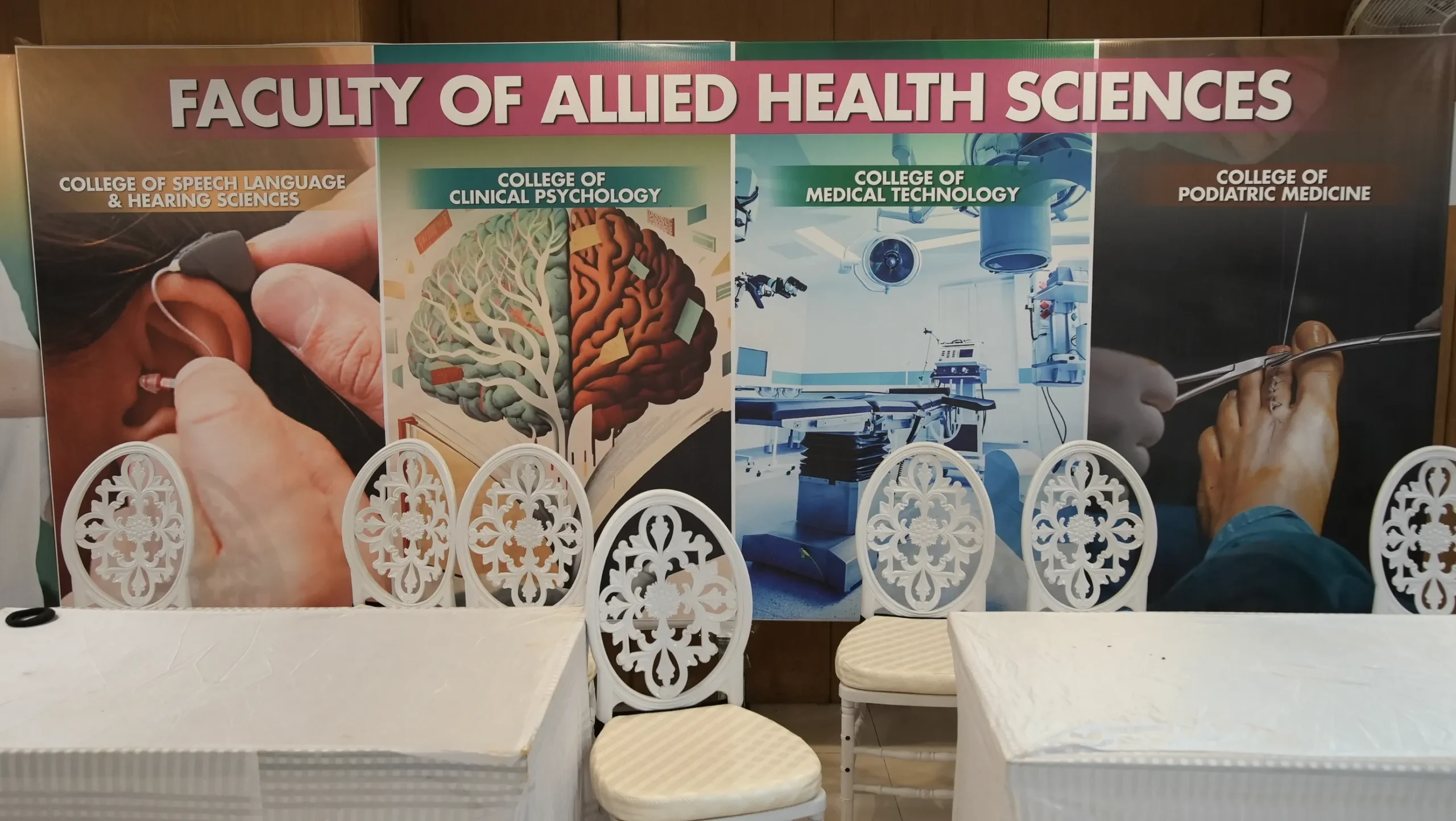
The Doctor of Occupational Therapy (DOT) programme was established in 2018 by the Department of Occupational Therapy at Ziauddin College of Rehabilitation Sciences (ZCRS), Karachi. In December 2023, it evolved into the College of Occupational Therapy (ZCOT) under the Faculty of Allied Health Sciences, becoming a dedicated institution focused solely on occupational therapy education. The programme is affiliated with the World Federation of Occupational Therapists (WFOT), ensuring its curriculum meets international standards for professional education and practice.
This strategic development addresses the growing demand for occupational therapists in Pakistan by reducing gaps in education, clinical practice, and integration within rehabilitation teams across the care continuum.
Globally, over 2.4 billion people—around one-third of the population—live with health conditions that would benefit from rehabilitation. Occupational therapy is essential in enhancing functional independence and occupational performance, yet the shortage of trained professionals remains a pressing concern.
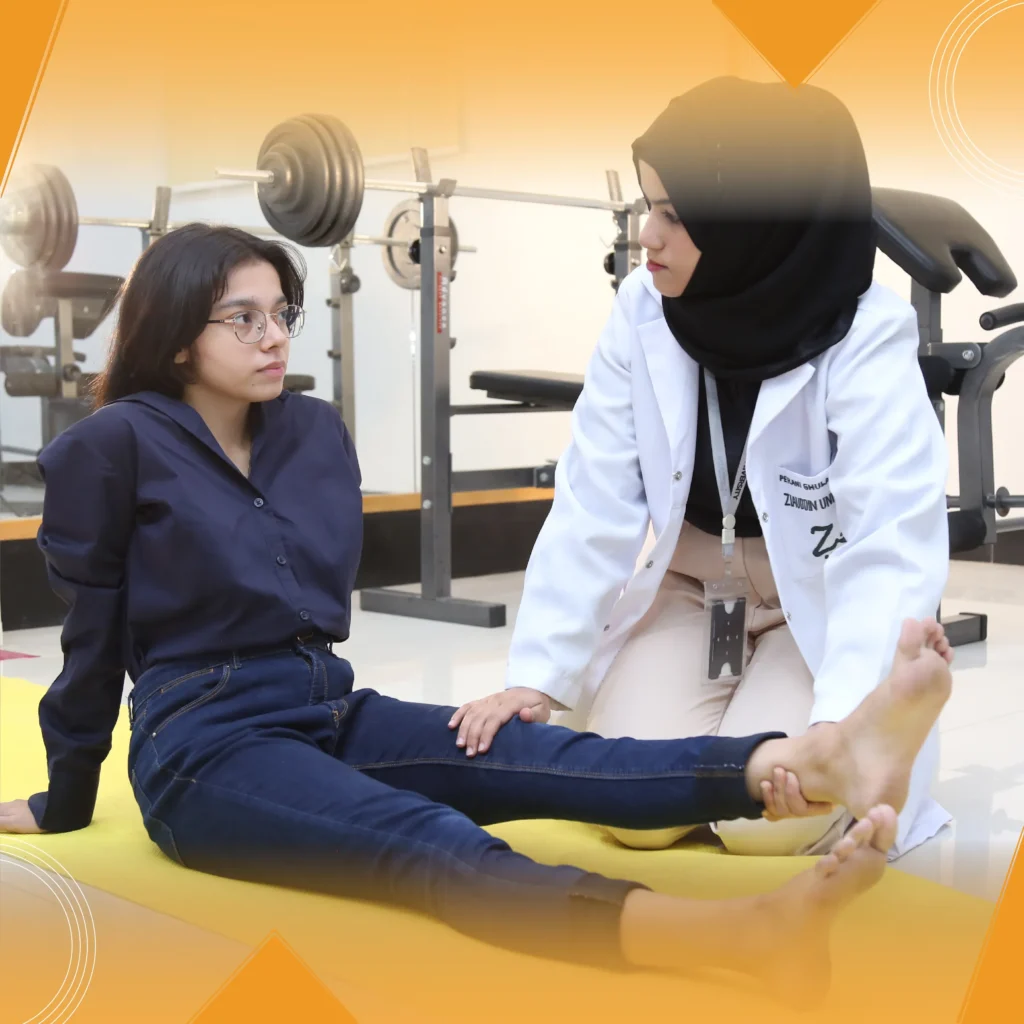
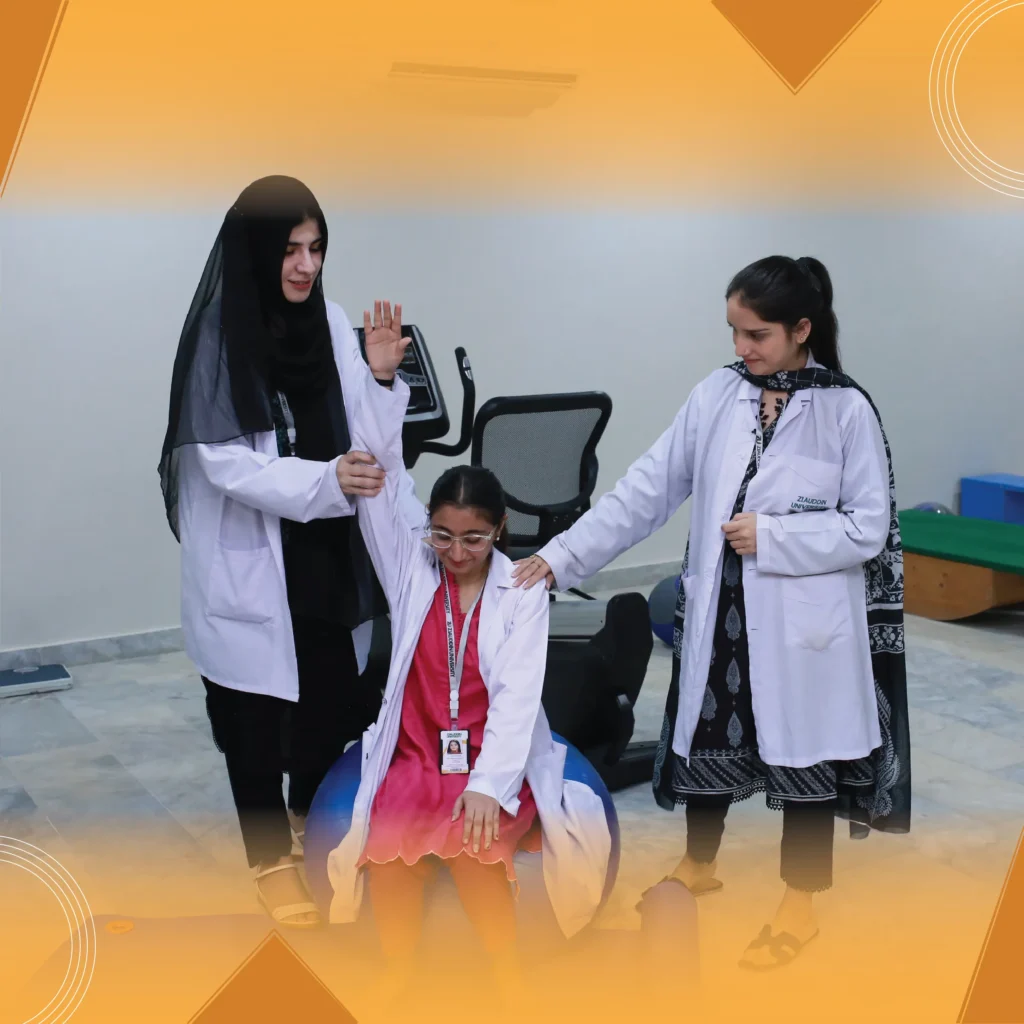
ZCOT offers both undergraduate and one-year professional deficiency programmes, including the Doctor of Occupational Therapy and Accelerated Doctor of Occupational Therapy. The curriculum blends theoretical knowledge with hands-on clinical training across diverse settings, preparing students to work with children, adults, and the elderly.
Our highly qualified faculty is dedicated to cultivating professional excellence and empowering students with the competencies to assess, diagnose, and treat a wide range of conditions effectively.
The programme aims to provide quality education to occupational therapy graduates in order to prepare them to contribute to the community by providing rehabilitation services for their health and well-being in accordance with the SDGs, particularly Goals 3, 4, 5, 10, and 13.
Following graduation, the occupational therapist will demonstrate the following qualities:
- Exhibit comprehensive occupational therapy knowledge and skills
- Execute and demonstrate team spirit, interpersonal skills, and professional growth.
- Demeanour: evidence-based professional practice considering societal, ethical, and environmental factors.
These objectives are to be accomplished through:
- An innovative, integrated, system-based curriculum designed to permit continuous evolution/improvement.
- A strong content foundation in the physical, clinical, and behavioural
- Problem-based and case-based learning experiences, integrating scientific knowledge with clinical expertise.
- An emphasis on critical thinking, clinical decision making, outcome analysis, and evidence-based practice.
- An educational environment designed to promote learning.
- A sequence of simulated and actual clinical experiences across the curriculum.
- A study guide is created to facilitate learning, provide direction, and point out required
- critical information to students. It aims to maximise the personal benefit each individual can attain from the academic programme.
Minimum 50% marks in intermediate (Any Science Group) of the Higher Secondary Certificate Examination held by a recognised Board of Intermediate Education in Pakistan or O/A Level and other equivalents to HSC (science group).
Applications from overseas candidates are also invited.
- Attested copy of SSC / ‘O’ Level (IBCC Equivalence) Certificate
- Attested copy of HSC / ‘A’ Level (IBCC Equivalence) Certificate
- Attested copy of SSC / ‘O’ Level Mark Sheet
- Attested copy of HSC / ‘A’ Level Mark Sheet
- Attested copy of NIC or ‘B’ Form of Applicant
- Attested copy of NIC of 2 references
- Attested copy of NIC of Parents/Guardian
- HSC II Admit Card in case the result is not announced
- Applicant’s one (1) passport-size photograph
- Student Selection
The final selection of students is decided on the basis of their performance in the following:
- Secondary School Certificate
- Higher Secondary Certificate
- Ziauddin University Test
- Interview
| FIRST PROFESSIONAL YEAR | |||
| SEMESTER-I | |||
| S.no | Updated Course Code | Subjects | Credit Hours |
| 1 | OTAN-111 | Anatomy-I | 3(2-1) |
| 2 | OTPH-112 | Physiology-I | 3(2-1) |
| 3 | OTKI-113 | Kinesiology-I | 3(2-1) |
| 4 | OTBI-114 | Biostatistics-I | 3(3-0) |
| 5 | ZUGE-004 | Functional English | 3(3-0) |
| 6 | ZUGE-003 | Pakistan Studies | 2(2-0) |
| 7 | ZUGE-009/ZUGE-012 | Understanding of the Holy Quran-I / Philosophy of Life – I | 1(0-1) |
| Total | 18 | ||
| SEMESTER-II | |||
| Subjects | Credit Hours | ||
| 1 | OTAN-121 | Anatomy-II | 3(2-1) |
| 2 | OTPH-122 | Physiology-II | 3(2-1) |
| 3 | OTKI-123 | Kinesiology-II | 3(2-1) |
| 4 | ZUGE-005 | Expository Writing | 3(3-0) |
| 5 | ZUGE-006 | Application of ICT | 3(2-1) |
| 6 | ZUGE-001/ZUGE-002 | Islamic Studies / Moral Ethics | 2(2-0) |
| 7 | ZUGE-008 | Ideology and Constitution of Pakistan | 2 (2-0) |
| 8 | ZUGE-010/ZUGE-013 | Understanding of the Holy Quran-II / Philosophy of Life-II | 1(0-1) |
| Total | 20 | ||
| SECOND PROFESSIONAL YEAR | |||
| SEMESTER-III | |||
| Subjects | Credit Hours | ||
| 1 | OTIO-211 | Introduction to Occupational Therapy | 4(3-1) |
| 2 | OTBM-212 | Biomechanics | 3(2-1) |
| 3 | OTPP-213 | Professional Practice (Ethics, law, and administrations)and Contemporary Issues | 3(3-0) |
| 4 | OTBG-214 | Biochemistry and Genetics | 2(2-0) |
| 5 | OTBI-215 | Biostatistics-II | 3(3-0) |
| 6 | OTIP-216 | Introduction to Psychology | 3(3-0) |
| 7 | OTAI-217 | Integration of Artficial Intelligence | 3(3-0) |
| 21 | |||
| SEMESTER-IV | |||
| Subjects | Credit Hours | ||
| 1 | OTAE-221 | Occupational Therapy Assessment and Evaluation-I | 4(3-1) |
| 2 | OTDA-222 | Developmental and Abnormal Psychology | 3(2-1) |
| 3 | OTPM-223 | Pathology and Microbiology | 3(3-0) |
| 4 | OTSO-224 | Sociology I | 2(2-0) |
| 5 | OTTA-225 | Therapeutic Activities and their Techniques-I | 3(2-1) |
| 6 | OTMC-226 | Medical condition -I | 3(3-0) |
| Total | 18 | ||
| THIRD PROFESSIONAL YEAR | |||
| SEMESTER-V | |||
| Subjects | Credit Hours | ||
| 1 | OTMC-311 | Medical condition II | 3(3-0) |
| 2 | OTSO-312 | Sociology-II | 2(2-0) |
| 3 | OTTA-313 | Therapeutic Activities and their Techniques-II | 3(2-1) |
| 4 | OTAE-314 | Occupational Therapy Assessment and Evaluation-II | 4(3-1) |
| 5 | OTPC-315 | Psychiatric Conditions | 3(3-0) |
| 6 | OTSC-316 | Supervised Clinical Practices-I | 3(0-3) |
| 7 | OTFE-317 | Field Experience/Internship | 3(0-3) |
| Total | 18+3 | ||
| SEMESTER-VI | |||
| Subjects | Credit Hours | ||
| 1 | OTSI-321 | Sensory Integration | 3(2-1) |
| 2 | OTAC-322 | Occupational Therapy in Acute Care I | 3(2-1) |
| 3 | OTIP-323 | Occupational Therapy Intervention in Physical health | 3(2-1) |
| 4 | OTPH-324 | Pharmacology | 3(3-0) |
| 5 | OTSU-325 | Surgery-I | 3(3-0) |
| 6 | OTSC-326 | Supervised Clinical Practices-II | 3(0-3) |
| Total | 18 | ||
| FOURTH PROFESSIONAL YEAR | |||
| SEMESTER-VII | |||
| Subjects | Credit Hours | ||
| 2 | OTSU-411 | Surgery-II | 3(3-0) |
| 3 | OTAG-412 | Applied geriatric for occupational therapy | 3(2-1) |
| 4 | OTPO-413 | Prosthetics and Orthotics | 3(2-1) |
| 5 | OTIM-414 | Occupational Therapy Intervention in Mental health | 3(2-1) |
| 6 | OTSC-415 | Supervised Clinical Practices-III | 3(0-3) |
| Total | 15 | ||
| SEMESTER-VIII | |||
| Subjects | Credit Hours | ||
| 1 | OTCC-421 | Civics and Community Engagement | 2(2-0) |
| 2 | OTAC-422 | Occupational Therapy in Acute Care-II | 3(2-1) |
| OTSI-423 | SIRM | 3(2-1) | |
| 4 | OTRD-424 | Radiology & Diagnostic Imaging | 3(2-1) |
| 5 | OTAP-425 | Applied Pediatrics for Occupational Therapy | 3(2-1) |
| 6 | OTSC-426 | Supervised Clinical Practices-IV | 3(0-3) |
| Total | 17 | ||
| FIFTH PROFESSIONAL YEAR | |||
| SEMESTER-IX | |||
| Subjects | Credit Hours | ||
| 1 | ZUGE-007 | Entrepreneurship | 2(2-0) |
| 2 | OTAT-512 | Assistive Technology and Rehabilitation Environment | 3(3-0) |
| 3 | OTER-513 | Ergonomics | 3(2-1) |
| 4 | OTSC-514 | Supervised Clinical Practices-V | 6(0-6) |
| 5 | OTEB-515 | Evidence Based Practice | 3(2-1) |
| Total | 17 | ||
| SEMESTER-X | |||
| Subjects | Credit Hours | ||
| 1 | OTCR-521 | Community Based Rehabilitation and Teaching Methodology | 3(2-1) |
| 2 | OTHW-522 | Health and Wellness in Occupational Therapy | 2(2-0) |
| 3 | OTML-523 | Management and Leadership | 2(2-0) |
| 4 | OTSC-524 | Supervised clinical practices- VI | 5(0-5) |
| 5 | OTRP-525 | Research Project | 3(0-3) |
| Total | 15 | ||
| Total Credit Hours | 177 | ||
| 177+3=180 | |||
PLO 1: Applied Knowledge
An ability to integrate and apply advanced knowledge of basic health sciences, occupational science, and performance components to analyze daily life occupations and solve complex functional challenges to support independent living.
PLO 2: Problem Analysis
An ability to identify, formulate, and analyze complex clinical issues by implementing the occupational therapy process—including comprehensive assessment, evaluation, and intervention—through the integration of appropriate theoretical frames of reference.
PLO 3: Investigation
An ability to methodically investigate occupational performance, activity demands, and limitations through literature review, clinical evaluation, and data synthesis to formulate evidence-based intervention plans and research outcomes.
PLO 4: Modern Tool Usage
An ability to select and apply modern assessment tools, therapeutic techniques, health technologies, and AI/IT resources to evaluate and support physical, cognitive, psychosocial, and sensory aspects of occupational performance.
PLO 5: The Professional Ethics and Society
An ability to apply ethical reasoning, occupational therapy codes of conduct, and social justice principles to address contextual, societal, and health-related issues while delivering safe and equitable client care.
PLO 6: Environment and Sustainability
An ability to understand the impact of therapeutic interventions on societal and environmental contexts, designing inclusive, community-based rehabilitation solutions that promote sustainable development and long-term integration.
PLO 7: Leadership and Team Work
An ability to function effectively as an individual, team member, or leader in multidisciplinary healthcare settings, applying project management and strategic organizational skills to drive
client advocacy and health initiatives at national and global level.
PLO 8: Communication & Soft Skills
An ability to communicate effectively, both orally and in writing, with clients, interprofessional healthcare teams, and the broader community to deliver formal presentations, document clinical outcomes, and convey clear professional instructions digitally or in person.
PLO 9: Lifelong Learning
An ability to recognize the necessity of, and actively engage in, independent continuous professional development and lifelong learning to keep pace with evolving health technologies, research, and evidence-based clinical practices.
There is a growing demand for occupational therapists both locally and globally, offering a wide array of career opportunities across healthcare, education, and community sectors. Qualified occupational therapists work with individuals across the lifespan—from infants to the elderly—addressing physical, cognitive, emotional, and social challenges that impact daily functioning.
An OT can be employed in a diverse range of settings, including:
- Hospitals and rehabilitation centres
- Schools and special education institutions
- Community-based programmes such as group homes, senior centres, and homeless shelters
- Business and industrial workplaces, supporting employee wellness and return-to-work programmes
- Mental health facilities and addiction recovery centres
- Home health and early intervention programmes
Semester I | ||||
Description | Frequency | Fee/Cr. Hr | # of Cr. Hr | Total Fee |
Tuition Fees | Semester / Per Credit Hour | 17,134 | 18 | 308,412 |
Examination Fees | Semester / Per Credit Hour | 847 | 18 | 15,246 |
Admission Fees | One Time | — | — | 50,000 |
Semester Registration Fees | Semester | — | — | 5,000 |
AHPC Registration Fees | Yearly | — | — | 1,000 |
Total Fees | 379,658 | |||
Note: Tuition and semester fees may be paid on a monthly basis upon the student’s request. Applicable to Fall 2026 batch and onwards. | ||||