
BS in Social Change & Development
- Introduction
- Eligibility Criteria
- Study Scheme
- Career Prospects
- Learning Outcomes
- Fee Structure
If you wish to expand your career horizons, pursuing a BS in Social Change & Development is the right decision! Based on state-of-the-art curriculum, this 4-year BS Social Change & Development (SCD) Programme provides students with a wide range of career prospects, both locally and internationally, that contribute to social change at varied levels. The SCD Programme intends to nurture an interdisciplinary and comprehensive understanding of the complex problems of development and social change and integrates social science disciplines such as anthropology, economics, political science and sociology along with contemporary thematic studies such as gender and development, community engagement for sustainability and change, and conflict & alternative dispute resolution. This programme allows students to solve a range of social change and development problems using a PBL approach by investigating, analysing and synthesising complex information with available resources. The SCD Programme equips its students with a thorough theoretical understanding together with hands-on and practical training.
To nurture an interdisciplinary and comprehensive understanding of the complex problems of development and social change.
BS Social Change & Development cultivates problem and evidence-based learning approach which directs students to practically engage with the issues within our society. This programme invites students to become agents of social change and in turn strengthen their community and society by resolving global/local issues.
1) A four-year degree based on the HEC-approved curriculum, focusing on 21st-century skills.
2) A blended learning environment where students can gain and demonstrate knowledge of the latest educational technology.
3) A highly qualified and experienced faculty;
- Furnished and air-conditioned classrooms with multimedia facilities
- A collection of useful resources for lifelong learning
- Competitive state-of-the-art undergraduate program
- Highly qualified faculty
- Academic and Professional Counselling facilities for students
- Conducive learning environment with required Infrastructure and facilities
Minimum A-Levels 3 passes/45% marks in Intermediate or equivalent from a recognised institution.
| Semester 1 | Semester 2 |
| Functional English | Academic Reading & Writing |
| Pakistan Studies | Islamic Studies/Moral Ethics |
| Introduction to Sociology | Quantitative Reasoning I |
| Literature & Society | Introduction to Social Psychology |
| Perspectives on Identity in the Contemporary World | Gender & Social Change |
| Introduction to ICT & Digital Literacy | Individual Wellbeing & Development |
| 6 Courses = 18 CH | 6 Courses = 18 CH |
| Semester 3 | Semester 4 |
| Technical & Professional Writing | Classical Sociological Theory |
| Development of Social Thoughts | Social Philosophy & Critical Thinking |
| Introduction to Social Change & Development | Population Studies |
| Social Anthropology: Cultural Representations, Beliefs & Practices | Economics & Development |
| Quantitative Reasoning II | Sustainable Development- From MDGs to SDGs: Major Learning & Implications |
| Project Planning & Management | Internship Project (SDGs – Project Practicum) |
| 6 Courses = 18 CH | 6 Courses = 18 CH |
| Semester 5 | Semester 6 |
| Methods of Social Sciences Research | Diversity, Social Justice, Equity & Development |
| Social Change & Development in Pakistan | Rural & Urban Development: Issues & Perspectives |
| Sociology of Human Rights | Research Thesis & Report |
| Elective I | Elective III |
| Elective II | Elective IV |
| 5 Courses = 15 CH | 5 Courses = 15 CH |
| Electives I (Options) | Electives II (Options) |
| 1. Development Communication 2. International Relations 3. NGO Management | 1. Media as 4th Pillar of State for Social Change & Development 2. Visual Storytelling: Photography & Documentary in Advocacy 3. Introduction to Environmental Sociology |
| Electives III (Options) | Electives IV (Options) |
| 1. Introduction to Peace & Conflict Studies 2. Peace Leadership in South Asia 3. Alternative Dispute Resolution | 1. Social Statistics 2. Results-Based Project Management 3. Financial Management |
| Semester 7 (Project Based Learning on Poverty Issues) | Semester 8 (Project Based Learning on Health/ Education Issues) |
| Philosophy of Development & Psychology of Poverty | Philosophy & Psychology of Human Nature & Well-Being |
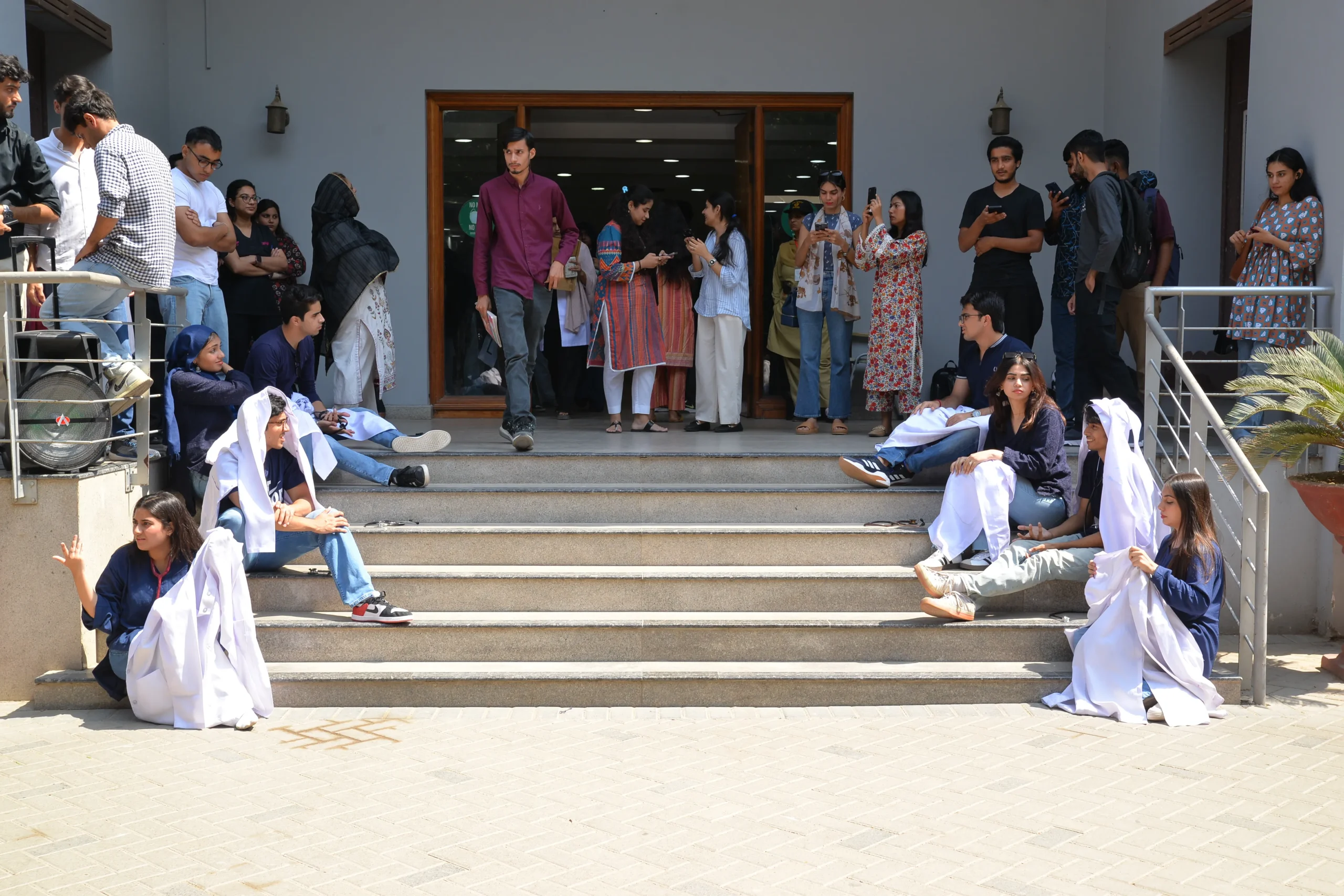
| Poverty/Development Advocacy Through Performing Arts | Health/Education Issues Across Cultures & Ideologies |
| Poverty & Women Empowerment | Study of Social Enterprises in Health Care/Education: Operations & Processes |
| Social Enterprise Incubation | Social Enterprise Incubation |
| 5 Courses = 15 CH | 5 Courses = 15 CH |
- Civil Services
- SME – Associates
- CSR Associates at Banks/Multinational Firms
- Legal Team Associates
- Citizen Journalism
- Content Developers/Documentary Developers
- Social Media Influencers
- Education & Development Sector
- Researchers at NGOs & INGOs
- Monitoring & Evaluation
- Teaching & Lectureship
- Mediation Counsellor
- Social Entrepreneurs
Graduates will understand the social, economic, and political factors driving change and development. They will learn to analyse policies, advocate for social justice, and design community-based solutions. The programme emphasises research skills, leadership, and effective communication for driving positive change. Students will explore topics such as sustainable development, human rights, and public policy. They will also gain practical experience through fieldwork and projects with NGOs and governmental organisations. By the end of the programme, graduates will be prepared to work in social development, policy-making, community engagement, and humanitarian sectors, fostering meaningful social transformation.
| Description | Amount |
| Application Fee (one time) | 5,000 |
| Admission Fee (one time) | 5,000 |
| Tuition (by course) | 15,000 |
| Examination Fee (by course) | 2,000 |
| Security Deposit (one time) | 5,000 |
| Student Fund (yearly) | 10,000 |